
From Stages to Pages: Mary Messner’s Book on Asking for Help
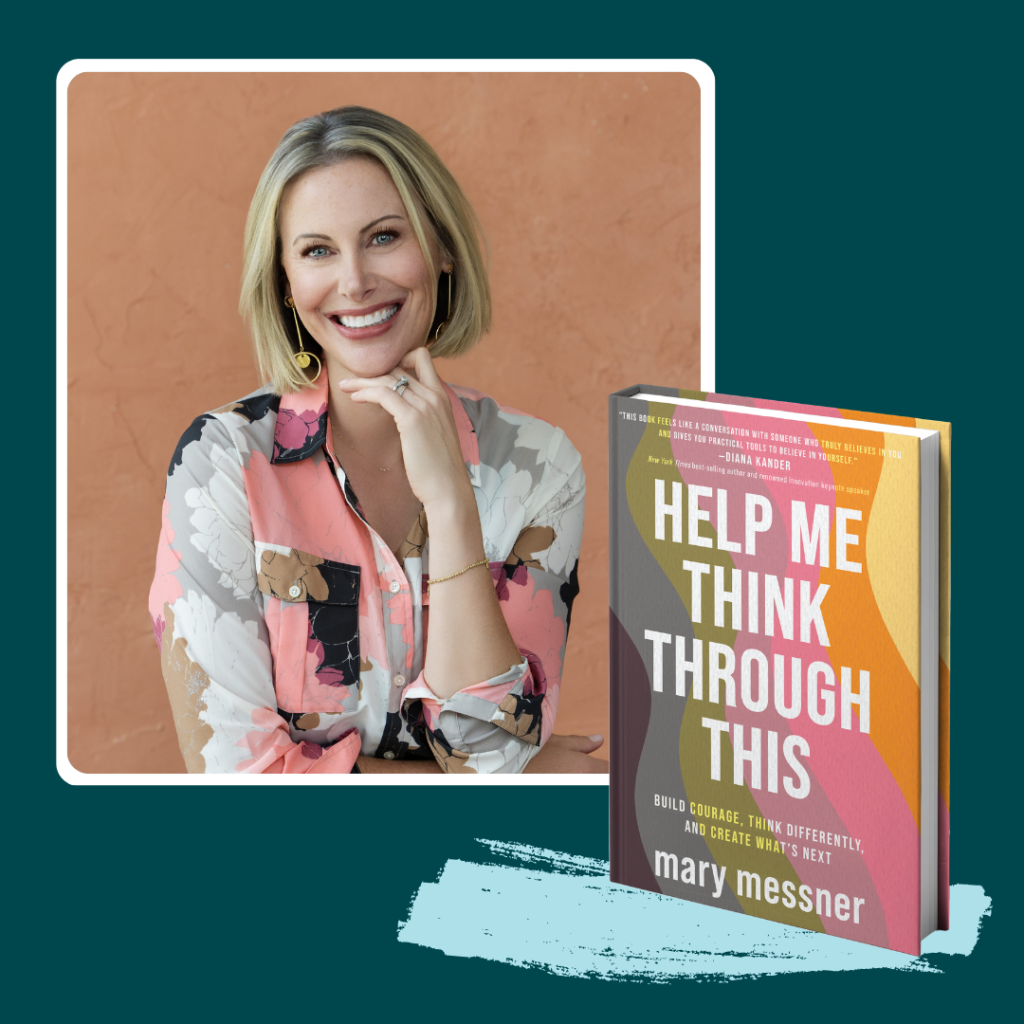
The Story
Mary Messner has spent years teaching people that asking for help isn’t a weakness; in fact, it’s a skill. As a keynote speaker, she’s watched her own phrase, “help me think through this,” travel further than she ever expected. It’s shown up in therapy sessions, team meetings, and the private, quiet moments when someone feels stuck and doesn’t know where to turn.
Her core idea starts somewhere unlikely: a kindergarten classroom. A teacher had taped a circle to the floor, and every time she wanted to read a book or share a lesson, she’d invite the class to sit on it. Mary politely refused, which earned her mother a conference and Mary a lesson in conformity she’s still unpacking decades later. That same pressure shows up in the workplace as “that’s just not how we do things around here.” It shows up for women in how they’re told to look, act, and dress.
That refusal became the seed of what Mary now calls “standing on your own circle,” a way of naming the pressure to shrink, to fall in line, to stop taking up space, and to choose instead to stay grounded in who you actually are. It’s a phrase she’s used throughout her speaking career, and now it’s woven into her new book, Help Me Think Through This, built around helping others push back against “normal” and stand a bit taller.
The Curiosity
People had been telling Mary for years to take the step that speakers with a powerful message like hers eventually take: write a book. She’d been circling the idea but never quite landed on it. Then, a year ago, everything shifted at a single event.
Mary’s mom was in the audience that day. After Mary got off stage, a woman her mom went to college with asked where she could buy Mary’s book. Her mom had to explain that the book didn’t exist yet.
“That is a sign that this isn’t just something I think I should do, this is actually something that people are asking for, and that maybe what I put onto paper can make a difference for somebody,” Mary said. Finally, the idea stopped being a someday project and became a deadline.
The Effort
Help Me Think Through This grew out of a TED Talk Mary gave a year earlier, where she first introduced the phrase publicly. The premise is simple but easy to miss: courage doesn’t always have to come from inside you. Sometimes it comes from inviting someone else into the mess with you, not by demanding answers, but by asking them to help you think. “The phrase, ‘help me think through this,’ is a way to bring other people into your world,” she explained.
But the thing that scared her most about writing wasn’t the writing itself. For her, it came down to one question: Are people going to like it? Her own framework exists to hold that exact fear. Standing on your circle doesn’t mean the doubt disappears; it means you have somewhere steady to plant your feet while you feel it anyway.
The Solution
The universe connected Mary to ShareYourStory.com, or so she still describes it. She knows how that sounds. Still, she says it anyway, because it’s true.
She first crossed paths with Chief Relationship Officer Will Severns somewhere she can barely remember, then ran into him again at a coffee shop a week later, and again two weeks after that. Somewhere in there, they realized they’d gone to the same high school, and that his sister had been in Mary’s grade. “Because the universe told me to, and that sounds really woo-woo, but it’s the truth,” Mary said.
That familiarity mattered. Before anything was signed, there was already trust in place, which made handing over a folder of half-formed ideas feel less like a risk. Mary published through Streamline Books, ShareYourStory’s publishing arm, and worked closely with the team to turn her notes and voice memos into Help Me Think Through This.
The Journey
Mary walked into the process with a mountain of raw material: voice memos, scraps of paper, half-formed stories. What she lacked was a clear way to turn any of it into something readable. What she did have was a structure already living in her head, including “the creative highline,” a framework built from the real maritime practice of transferring fuel, supplies, and even injured sailors between two moving ships at sea. It became one of the book’s central metaphors for chasing a big goal: name your ship, send out a messenger line, and let people close enough to help you cross.
That’s where her collaborator, Lily, came in. She helped Mary shape scattered ideas into a structure she felt was digestible and allowed her to finish on her timeline. Mary describes it as the purest version of her own philosophy in action: the book itself became a “help me think through this” moment, start to finish.
Throughout the process, what surprised her most wasn’t the writing but everything surrounding it: cover design, copyediting, the dozens of moving pieces that live alongside the actual words. “I truly had no idea the magnitude of that,” she said. She also didn’t expect to enjoy it as much as she has. There’s something almost addictive about the process, the kind of work that left her ready to start the next chapter and keep going.
The ROI
Help Me Think Through This is now available on Amazon and Bookshop. Mary set a public goal of selling 1,000 copies by the end of the year, and she’s treating every conversation, podcast, and post as her own messenger line, reaching out to bring people in.
The phrase was already spreading well before launch day. Mary has heard from clinicians who now use it with patients, and from teams who have restructured their meetings around it. One person told her they started saying it to themselves in private moments of feeling stuck, just to open their thinking in a different way. For Mary, that’s the clearest evidence yet that asking for help, framed the right way, changes how people move through hard moments.
What’s Next for Mary Messner?
These days, Mary splits her time between the stage and building out what comes after it, including a membership she’s developing to keep the conversation going past the book’s final page. She’s leaning further into Instagram, where she describes her content as “a little bit of chaos“: video, carousels, ideas she’s still figuring out in real time, alongside the more established presence she’s built on LinkedIn over the years.
Her mother has already pitched her the next book idea. Mary’s answer, for now, is a laugh and a firm not yet.
Mary isn’t done building. Between the speaking circuit, the book launch, and the conversations Help Me Think Through This has already sparked, she’s holding onto the same principle the book is built on: invite people in, even when the idea is messy, and see what happens when you finally get comfortable asking for help.
Listen Mary’s full episode on Apple Podcasts and Spotify.
