
How Dr. Kasi Lacey Turned Imposter Syndrome into a Confidence Movement for Women
The Story
Dr. Kasi Lacey has spent her career helping women stop doubting themselves. For a long time, she was the one who found herself in that seat. A psychologist, keynote speaker, and executive confidence coach, Kasi knows the research on confidence for women leaders cold — and she also knows what it feels like to sit in a room full of people, qualified by every measure, and still wonder when someone’s going to figure out you don’t belong there.
She holds a PhD in counseling psychology, which she earned at 26, and became an executive director over counseling and health services at a small college shortly after. She eventually worked her way into a vice president role at a university, becoming the only female VP in the room for years. And through all of it, imposter syndrome followed her like a shadow.
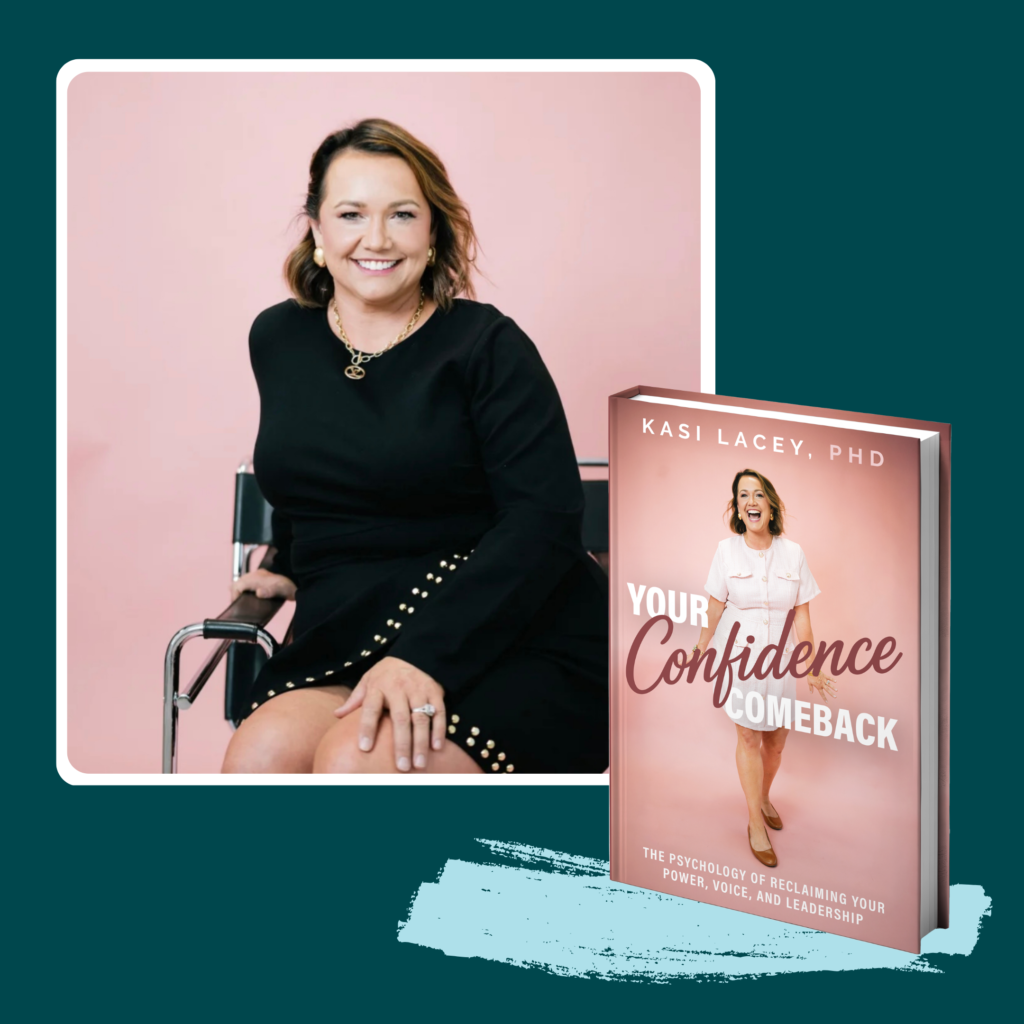
Her debut book, Your Confidence Comeback: The Psychology of Reclaiming Your Power, Voice, and Leadership, came out of that lived experience and out of the hundreds of women she’s coached and spoken to who recognized their own story in hers.
The Curiosity
The idea of writing a book had been sitting in the back of Kasi’s mind for years, but she was reluctant to start. However, something strange kept happening after every speech that felt like a sign.
“People would come up and say, ‘Where’s your book?’ And I’d think, ‘I guess I need to write one.'”
The response from her audience became impossible to ignore, especially given the gap she saw. The conversations happening around confidence were too loud, too brash, too focused on performance. They missed what she believed was the real thing: an inner self-trust that doesn’t require you to prove anything to anyone.
One of the biggest motivators: she also had two daughters watching.
“I have this legacy. I wanted them to see confident women. But I also want them to be in environments where confident women are supported.”
The book she wrote isn’t just about feeling better. It’s about understanding the research: why 75% of women experience imposter syndrome, how socialization shapes confidence differently for men and women, and what it actually looks like to rebuild self-trust from the inside out. It includes a feelings wheel, frameworks for psychological safety, and real stories from her own career, including the year she discovered the search committee had been told to hire a man and she didn’t even get an interview.
She went back and fought for the job anyway.
The Effort
Even with her audience asking and the idea burning, Kasi still hesitated about her book for years. The hesitation wasn’t about time or expertise. It was about exposure.
“When you write a book, people are going to read this. You think: they’re going to judge me. They’re going to hate it. What if someone gets upset about a story?”
Kasi had to navigate the vulnerability of going out on her own, building a personal brand, posting her experiences on LinkedIn, and learning, sometimes harshly, that not everyone would be cheering. She still remembers the man who walked up to her at an event and told her he was tired of seeing her content. She told him to unfollow her.
But a book felt bigger. More permanent. More exposed.
What got her through it was the same thing she teaches her clients: pushing past the ego.
“At the end of the day, even if one person reads my book and it helps them — that’s it. That’s all I care about.”
The Solution
The moment things shifted wasn’t a lightning bolt. It was a mid-Missouri speakers group and a conversation she hadn’t planned on having.
Kasi had connected with the group through a dear friend, a therapist who had worked in her office and happened to also become her book editor. It was the kind of full-circle coincidence she describes as “gifts from the universe.” At one of those gatherings, she met Alex Demczak, CEO of ShareYourStory.com.
“When I met Alex, I was like, ‘It’s time.’ I have this resource in front of me. People are asking for it. I know this is on my heart.”
But what sealed it wasn’t just the timing. It was the energy. Kasi had been in enough professional environments to know immediately whether people actually cared about the humans in front of them. She found that at ShareYourStory.
“You could just feel it. We talked about psychological safety — they have that. It’s beautiful to see something Alex has created, but also this environment of how they’re supporting each other.”
The Journey
The process was personal in ways Kasi didn’t entirely anticipate.
She worked closely with the team throughout her writing experience, including regular calls she looked forward to each week. Kasi soon figured out that writing an honest book means telling people your stories, the ones you’ve been carrying privately, and trusting them with the weight of that.
She also credits Jamie Smith, Publishing Manager, for staying on top of every detail and keeping the process moving. And Alex, she says, was present in ways that felt more personal than transactional, texting her when the first copies arrived and sending a photo of the book on his fireplace. “This is where we met,” he wrote.
There were harder moments too. Editing, she admits, is its own particular kind of suffering: reading and rereading the same pages, analyzing every word, sitting with the question of whether it was actually good.
But holding the finished book? That feeling was indescribable.
Her daughters held it up. She took the picture. It’s now her favorite photo she owns.
The ROI
Before the book was officially in readers’ hands, Kasi had already logged hundreds of pre-orders. It was proof that the people who needed to hear her message were ready.
Kasi’s speaking engagements are already expanding, including a Mastermind Session for ShareYourStory’s very own Storytelling Community. The conversations she’s having with organizations are deepening further than they have before. The book gives her work a home, something people can hold, share, and return to.
More than the business wins, though, are the personal ones. Notes from clients. Messages from people who heard her speak and finally had words for something they’d felt for years but couldn’t name.
“When someone gives a shout-out and says, ‘You said this, I totally resonate, I’ve had that experience too’ — that’s the win. They don’t feel alone. That’s all I care about.”
What People Are Saying?
- I will be passing this on to all of my clients to help with their confidence! Kasi is my new favorite speaker!! She is an expert when it comes to reclaiming your voice!! Thank you for writing this!
- Dr. Kasi Lacey blends professional expertise with real-world wisdom, providing practical tools to build confidence, strengthen your voice, and lead with intention. I finished it in one afternoon and came away feeling encouraged, empowered, and ready to take action.
What’s Next for Dr. Kasi Lacey?
Kasi lives in Missouri with her husband and two daughters, the ones who inspired the book and who now hold it in their hands like it’s already theirs. She’s deepening her keynote speaking work, with a current focus on trust: a quiet crisis running through workplaces, leadership, and even consumer relationships in an era of AI and rapid change.
“We’re in a trust recession. Self-trust, trust in leadership, trust from your customers — it all matters right now.”
She’s not thinking about book two yet. There’s celebrating to do first. For now, there’s Your Confidence Comeback: the one she carried for years in the back of her mind, the one her daughters are already proud of, the one that’s already making women feel less alone.
Listen to Kasi’s full episode on Spotify and Apple Podcasts.
