
The Science of Joy: How Zander Phelps Turned Play Into a Career
The Story
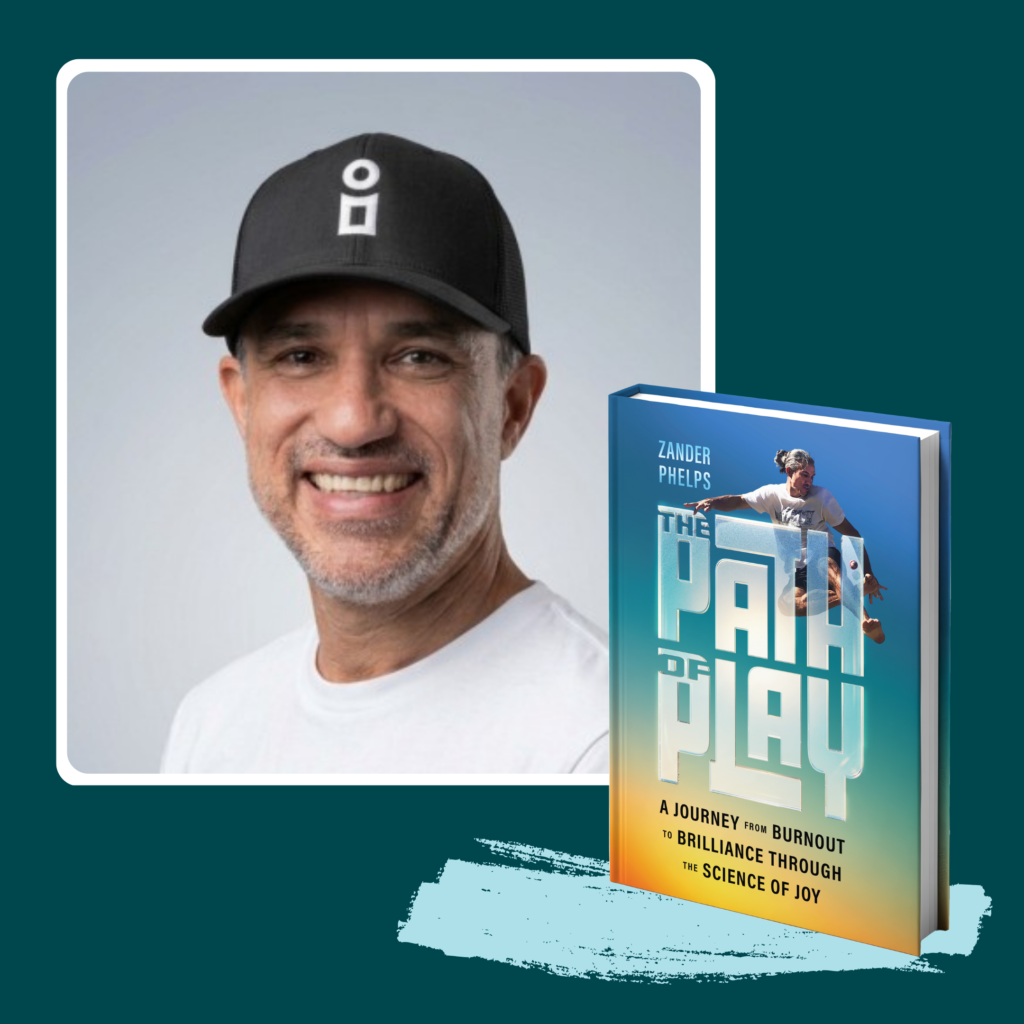
Zander Phelps has spent the better part of thirty years proving something most adults have quietly forgotten: play isn’t a break from real life; it’s the fastest way back into it. Online, he’s known as zPlayCoach. Now, he’s channeled three decades of that work into his debut book, The Path of Play: A Journey from Burnout to Brilliance Through the Science of Joy. He built this belief backpacking through more than fifty countries over ten years with almost nothing but a handmade footbag in his pocket.
That footbag has a name now. Zander calls it HACKiDO, and he’ll tell you it’s not really a toy. It’s a neuromuscular tool, a stress reliever, a way to calm an anxious grandparent or soothe a teething baby, and, most of all, an icebreaker that needs no shared language. He’s given it away by the thousands, in parks across four continents, always with the same line: “Keep it in your pocket. It’s gonna be the best gift anyone will ever give you.”
In Zander’s new book, though, he isn’t selling a footbag. Instead, he is showing a framework he calls the play flow state: the idea, backed by real neuroscience, that a few minutes of genuine play can shut down cortisol and flood the body with dopamine and serotonin faster than almost anything else available to a stressed-out adult. He didn’t discover this in a lab. He noticed it on every continent he visited, watching total strangers drop their guard the second a game started.
The Curiosity
The idea for the book had been circling for years. Every place Zander traveled, he noticed the same thing: when he brought out his footbag, there was no shared language required. A stranger would wander over, drop their guard, and start playing. He kept seeing it, over and over, across fifty countries, until it stopped feeling like a coincidence and started feeling like something worth writing down.
Zander figured out the reason it kept happening was rooted in physiology: Play tells the brain it’s safe. Safety turns off the stress response. And a brain that isn’t fighting or fleeing is a brain that’s free to think clearly, create, and connect, which is exactly the gap he saw a book could fill for readers who’d forgotten how to access that state on their own. He didn’t just want to tell people play was important. He wanted to hand them a way back into it.
The Effort
Zander always knew the book was in him. He just didn’t know what it would take to actually start it. What finally moved him wasn’t a burst of confidence. It was losing his job. Instead of dwelling on the loss, he turned it into a deadline. “Now’s the time, the perfect time for me to write down all my thoughts,” he remembers deciding. He started that January, and once the words began moving, they didn’t stop.
That didn’t mean the doubt disappeared. Zander is upfront that he had no real plan for what came after the writing. He’s social by nature, but he’ll also tell you he doesn’t have a large built-in network to lean on. For a lot of first-time authors, that uncertainty alone is enough to keep a manuscript in a drawer.
Zander’s way through the fear was to shrink the task in front of him until fear didn’t have anything to grab onto. “The goals I had every step of the book were so, like, little hurdles,” he explains. “I was like, if I can just get one chapter down, I’ll be excited. Oh, if I get this part down, oh, I’m excited. And if I just get it published, I’m excited.” One chapter. One small win. Then the next. It’s the same philosophy at the center of everything he teaches through play: don’t grip the result, just show up for the next small moment. It turned out to be exactly what let him finish the book.
The Solution
The introduction to ShareYourStory.com came through a friend. Zander mentioned he was writing a book, but figured he’d go the self-publishing route. His friend had a different idea and connected him with the Streamline Books team, ShareYourStory’s publishing arm.
What stood out wasn’t a sales pitch. It was the absence of one. Zander had already talked to a couple of other publishers, and each conversation had come loaded with pressure, the kind that makes a first-time author want to close the laptop and walk away. This felt different from the first call. “Very calm, patient, listening, and there was no pressure,” he says. “That was something that was like, okay, cool.”
He’s since told the friend who made the introduction that the book wouldn’t exist at this level without her, without the push into ShareYourStory, a hybrid publishing company that, as he puts it, held his hand through the entire process. “There’s no way that I would’ve put as much time into it, put as much energy into it, put as much love into it, without that push that you guys gave me.” Every person he connected with along the way, he says, was extraordinarily kind.
The Journey
He wanted the book to feel less like his story and more like an invitation for the reader to find their own. So each chapter ends with an “I Play” section, a set of reflective prompts that turn The Path of Play into part memoir, part journal. By the final page, a reader isn’t just finished reading about someone else’s journey. They’re standing at the beginning of their own.
“It felt like the book was starting to become too much of a ‘look at this,'” Zander explains. Adding the reflection prompts was how he pulled the focus off himself and onto the person holding the book, a shift that changed what the whole project was for.
That shift is part of why the finished book looks so different from what he originally set out to write, and it’s the part Zander says he’s proudest of. “It’s a personal journal for you to put how to awaken your own play,” he explains. What began as his own account of ten years on the road became something closer to a workbook, built for someone else’s transformation instead of just documenting his own. “The transformation from what I was originally intending to what the book is actually now is amazing,” he says. He didn’t just write down what happened to him. He built a way for readers to go find it for themselves.
The ROI
Zander wasn’t chasing metrics when the book launched. He didn’t have a plan for how it would reach people beyond his own circle. Even so, as his 30-year career and HACKiDO brand drew wider attention, outlets including USA Today, Yahoo Finance, Digital Journal, and the podcast Entrepreneurs on Fire, among others, shared the philosophy behind The Path of Play. The Path of Play rode alongside that visibility, reaching readers who found Zander through his broader work long before they found the book itself.
But the moment that landed hardest for Zander, the one that told him the book was actually moving, came from a friend on a pickleball court, in the middle of an ordinary conversation. His friend, tracking Zander’s travels through the book’s chapters, said, “You’re in Australia right now. I can’t wait to see where you’re traveling next.” For Zander, those were the words that hit him the most. “That was probably a great win for me, to be honest,” he says. “It caught me off guard.”
What People Are Saying
- “A beautiful reminder that play isn’t a luxury, it’s how you return to yourself. The Path of Play is a gift that is grounding, steady, and deeply human, guiding you back into flow, where joy, curiosity, and your best thinking live. Join us on this journey of discovery to grow as we go and tag the next person to keep the ripple flowing.”
- “Creativity doesn’t come from grinding nonstop; it comes from giving your brain space to reset and connect. This book is a great reminder of how powerful that can be.”
- “Building a business puts constant pressure on both the mind and body. Sustainable success comes from balancing growth with play. In the end, life and business are shaped by how we navigate both wins and losses.”
What’s Next for Zander Phelps?
These days, Zander is still doing exactly what the book describes: juggling down the street to see if he can shift someone’s mood, heading to the park at sunset to invite a stranger into a game, treating play less like a hobby and more like a discipline he schedules on purpose. His website, zplaycoach.com, now hosts a Play Character Type quiz built around four archetypes: warrior, wizard, druid, and bard, each one a different doorway into the same idea.
He’s not chasing a finish line. Instead, he is chasing connection through play, wherever he happens to be standing. The Path of Play is simply the written version of a philosophy he’s been living since a delayed flight and a gifted footbag first showed him the science of joy, and he’s not done handing it out one person at a time.
Listen Zander’s full episode on Spotify and Apple Podcasts.
